
Film Review: The People We Meet on Vacation
 Kayla Cano
 March 2, 2026
The screen adaptation of Emily Henry’s The People We Meet on Vacation arrives with the kind of anticipation usually reserved for a summer getaway. Instead of a breezy escape, the film feels more like being stuck in traffic on the way there—promising in theory, exhausting in practice.
The problem isn’t the premise. Friends-to-lovers romances thrive on tension, timing and chemistry, but this adaptation struggles to translate those essentials to the screen. Flat performances, rushed dialogue and an over-reliance on montage drain the story of the emotional intimacy that made Henry’s 2021 novel a bestseller, leaving a film that looks like a rom-com without ever feeling like one.
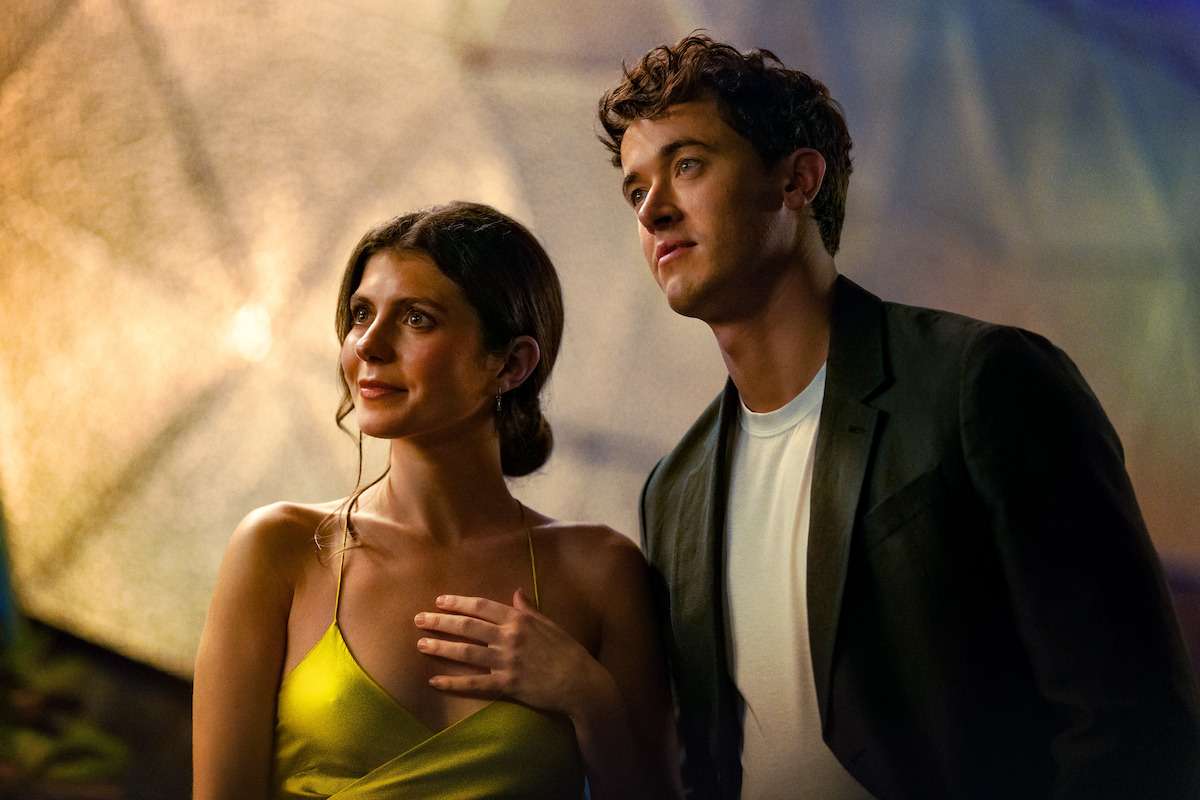
The story follows Poppy, a restless travel writer, and Alex, her cautious, routine-loving best friend, as years of shared vacations blur the line between friendship and romance. Their opposing personalities are meant to complement each other—she chases adventure, he craves stability—but the film never fully sells why these two would spend a decade circling the same unspoken feelings.
 Credit: Daniel Escale
On the page, Henry’s novel is tender and introspective. On screen, that interiority disappears. Key emotional beats are reduced to glossy travel montages scored with indie-pop needle drops, and conversations that should simmer instead sprint toward the next plot point.
In an early scene set in New Orleans, the pair trade supposedly meaningful confessions while wandering a street market, yet the moment feels staged rather than lived in, a pattern that repeats throughout the film. The leads deliver competent performances, but their interactions rarely spark the chemistry needed to sustain a slow burn.
Written, as whimsical and fearless, Poppy registers as overbearing and indecisive. Her repeated refusal to acknowledge feelings she has supposedly carried for years becomes less a source of romantic tension and more narrative stalling. Fans of the trope may enjoy the drawn-out restraint; for others, it reads as a relationship allergic to honesty.
 Credit: Michele K. Short
The adaptation enters a crowded field of literary rom-coms racing to replicate the success of films like To All the Boys I’ve Loved Before and Normal People, both praised for grounding romance in believable detail. Henry’s novel relies heavily on internal monologue, a challenge director Brett Haley attempts to solve with voice-over, flashbacks and postcard-style graphics. The approach highlights a common problem when translating contemporary romance: what works as private thought on the page can feel thin without a stronger cinematic texture.
Part of the frustration comes from how familiar the dynamic feels. Poppy represents the life many cautious planners wish they lived, while Alex mirrors the safe path most actually choose. The film gestures at that tension but never explores it deeply enough to become revealing or cathartic.
 Credit: Daniel Escale
Devoted readers may appreciate seeing beloved characters brought to life, and viewers seeking low-stakes comfort viewing could find it pleasant enough for a quiet night in. Those expecting the emotional pull of the novel—or simply a memorable romance—may leave wondering why the trip felt so long.
Some vacations change how you see the world. This one just makes you check the clock.
Kayla Cano is a senior journalism major with a minor in social work at the University of Texas at Austin. In her free time, she enjoys exploring new coffee shops around Austin and spending time with her dog, Smokey. Kayla is deeply passionate about storytelling and advocacy, and she hopes to use her work to amplify underrepresented voices.